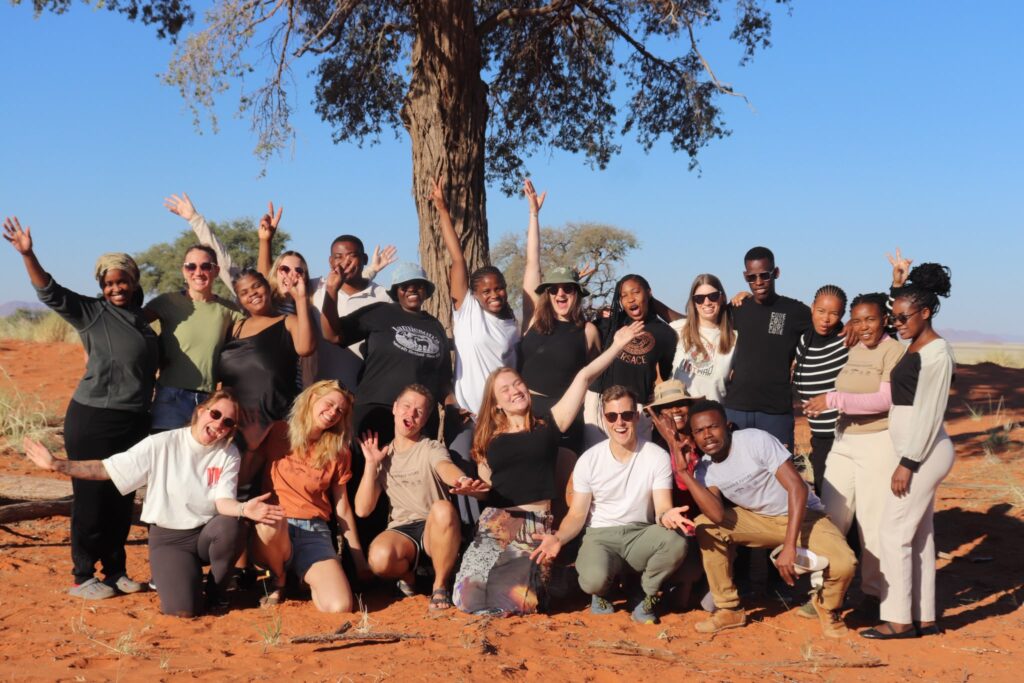
The German-Namibian Exchange of Educators 2026/27, an international educational programme organised by Suni e.V. and the Light for the Children Foundation, was launched again in spring this year. Over a period of eighteen months, the programme brings together aspiring and practicing educators from Germany and Namibia. A total of 16 participants – eight from each country – are taking part in the exchange, including student teachers, teachers, and social workers.
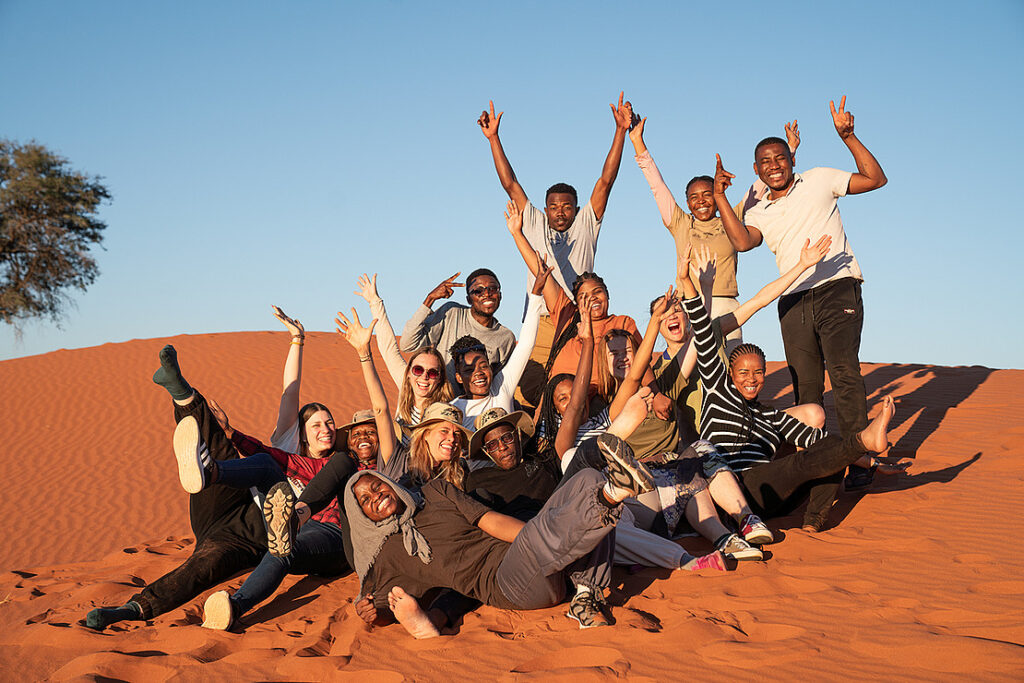
The programme focuses on developing intercultural competencies and advancing Education for Sustainable Development (ESD). Through online meetings, weekend workshops, and two study visits – one to Namibia and one to Germany – participants work in German-Namibian teams to design their own ESD projects. These projects are implemented together with school students from both countries within the framework of Global Service Learning, an international approach to learning through community engagement.
Since the programme began in May 2026, participants have met online several times to get to know one another and prepare for their collaboration. They are currently taking part in a three-week study visit to Namibia, where the German and Namibian teams are meeting in person for the first time.
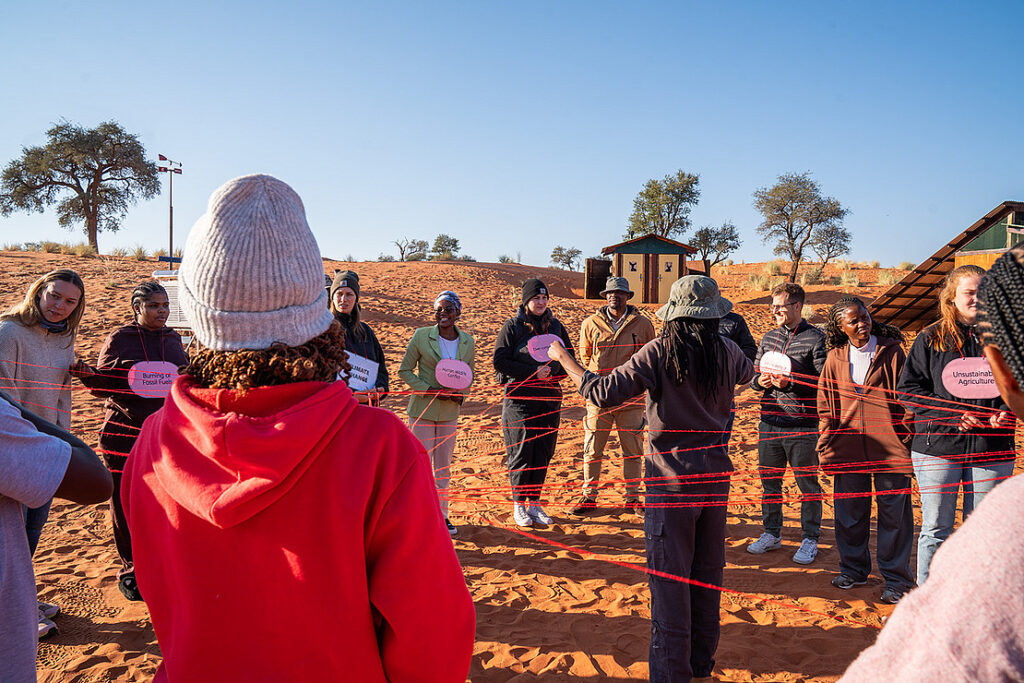
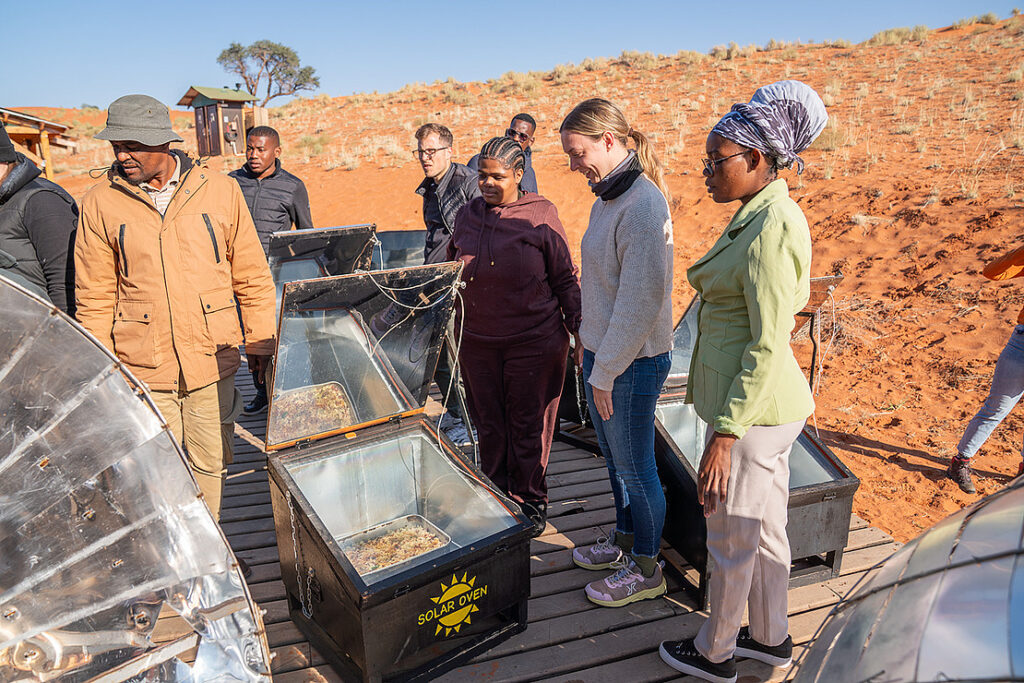
A particular highlight of the visit was a five-day seminar at the NADEET Centre in the NamibRand Nature Reserve. There, participants gained hands-on experience of sustainable living and learning. The programme included workshops on ESD teaching and learning methods, discussions on similarities and differences in educational practice in Germany and Namibia, biodiversity hikes, and learning sessions on topics such as climate change and sustainable decision-making. Participants also became familiar with NADEET’s Whole Institution Approach, in which sustainability is not only taught but consistently integrated into everyday life – for example through cooking with solar ovens and the daily monitoring and joint reflection on water and energy consumption.
Following the seminar, the German participants are spending five days at the schools of their Namibian exchange partners, gaining first-hand insights into the Namibian education system. Further programme activities include the joint development of German-Namibian ESD projects and visits to various educational institutions in the Omaheke Region, including schools and the Regional Directorate of Education.
Even at this early stage, participants are drawing highly positive conclusions from the exchange. Marie Oster, a student at Trier University, commented: “The first week has been incredibly enriching. I’ve already learned so much. Not only have I expanded my knowledge, but I’ve also made lasting friendships. Our Namibian partners have definitely set the bar high for their visit to Germany next year.”
Ineke Lil Freitag, a student at the University of Kassel, describes the group as very open and diverse: “We’re a great team, and it already feels as though we’ve known each other for years.” She particularly appreciates the diverse mix of participants from different stages of life and educational backgrounds. Through presentations, discussions, and shared activities during the stay at the NADEET Centre, she gained extensive knowledge about Education for Sustainable Development and developed a deeper understanding of its relevance and practical implementation in everyday school life. Experiencing the Whole Institution Approach at the NADEET Centre showed her what resource-efficient living can look like in practice. She also highlights the intercultural exchange as one of the programme’s most valuable learning experiences, characterised by mutual interest, patience, and openness.
Tjimasora Makotoka Ngupahua, a student at the University of Namibia, also emphasises the programme’s personal and professional significance. He describes it as a unique opportunity that has already provided “unforgettable experiences.” Meeting the German participants in person for the first time, he says, felt “as though we had known each other for many years.” He describes the time at the NADEET Centre as “highly educational – both theoretically and practically” and emphasises how much he learned about sustainable living. He was particularly impressed by the use of solar ovens, the biodiversity of the Namib Desert, and the collective reflection on water, energy, and other resource consumption. Everyday activities – from baking with solar ovens to washing dishes together – strengthened the sense of community and made the exchange a lasting professional and personal experience.
The exchange programme is led by Barbara Scharfbillig (Trier University and Board Member of Suni e.V.), Gijsbertha van Rooyen (Light for the Children Foundation, Namibia), Dr Tim Hartelt (University of Kassel and Board Member of Suni e.V.) and Elizabeth Kashango (Otjivero Combined School, Namibia, and Suni e.V.).
The programme is funded by the German-African Youth Office (Deutsch-Afrikanisches Jugendwerk) at Engagement Global with financial support from the German Federal Ministry for Economic Cooperation and Development, as well as by the Development Policy Network of Rhineland-Palatinate (ELAN e.V.) and the State Chancellery of Rhineland-Palatinate. Cooperation partners include Suni e.V., the Light for the Children Foundation, the Directorate of Education of the Omaheke Region, the University of Kassel, the University of Namibia, and Trier University.
The German-Namibian Exchange of Educators has been recognised as a Learning Place for Sustainability (LernOrt Nachhaltigkeit) in Rhineland-Palatinate, Germany and has also been officially recognised by the German UNESCO Commission as a Learning Place for Education for Sustainable Development.